We’ve been busy building, cooking, and shipping things for you to try. And we’re excited to share with you what’s next at DevDay! If you won’t be joining us in person, tune in to the free keynote livestream on September 29 at 10 a.m. PT. Meet us at DevDay Exchange We’re taking our flagship event on the road. Join OpenAI teams and local developers for technical sessions, demos, and conversations about what you’re building. We’re coming to Bengaluru, Tokyo, Seoul, Berlin, Paris, London, São Paulo, and Mexico City this October and November. Explore dates and apply.
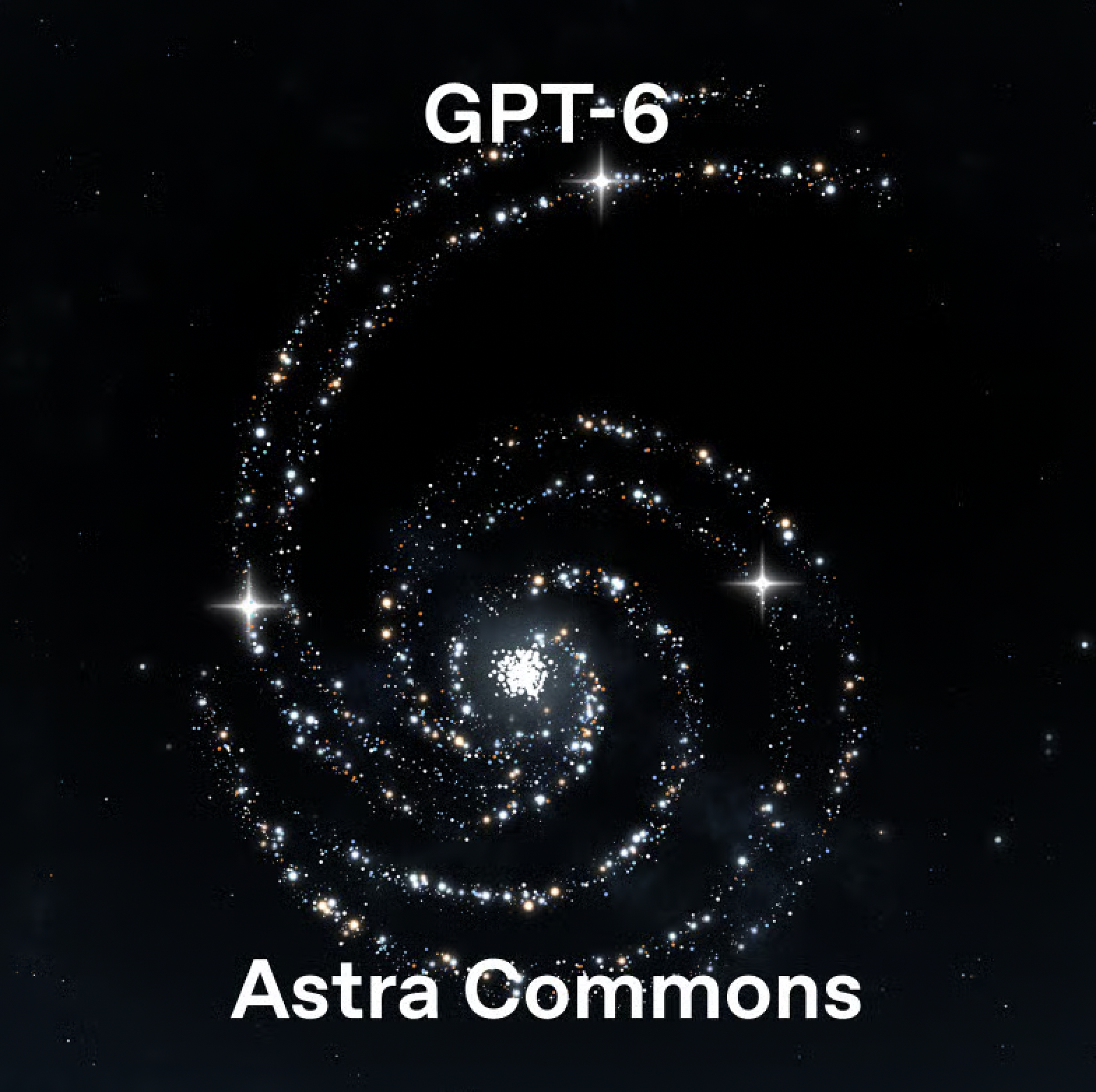
🔥 What’s new What shipped, what changed, what to try next GPT-6 Astra, Sol, and Luna: New models for computer use, coding, and high-volume work GPT-6 Astra is our most intelligent model yet, bringing stronger computer use, coding, and judgment to multistep work across apps. The GPT-6 series also adds GPT-6 Sol for complex everyday tasks, computer use, and coding tasks, and GPT-6 Luna for high-volume work and well-scoped tasks. Both have API prices 50% lower than their GPT-5.6 promotional pricing. Try demos built with Astra, see how they were made, and get ideas for making your own product more interactive in the showcase. Agents API: Codex harness in the cloud, now in public beta Build and run cloud agents with the Codex harness, fully managed by OpenAI, to take on long-horizon tasks. OpenAI manages orchestration, long-running sessions, and context while you define tools, workflows, and the execution environment. Explore sample apps for GitHub investigations, warehouse queries, and incident response. GPT-Live-1: New realtime model with better tool calling and more natural conversations GPT-Live-1 keeps audio streaming while a backend model handles reasoning and tools. Use the voice-agent evaluation cookbook to test spoken requests through tool calls to application state (even through interruption and background noise!). GPT-Image-2.5: 50% lower latency with Flare, precise edits with Sunburst GPT-Image-2.5 Flare and Sunburst are now available in the API. Flare improves image quality at 50% lower latency than GPT-Image-2; Sunburst takes more time for detailed creative work and precise edits. Check out the prompting guide for examples of generation, targeted edits, and keeping subjects consistent. Check out our developer blog for more insights from our team.
📣 Insider scoop Go behind the scenes with OpenAI engineers Making inference faster without trading away efficiency Jalapeño, OpenAI’s first custom inference chip, was designed across chip, memory, networking, and serving software. Early tests show higher throughput and lower latency together, exactly the combination agentic workloads need.
“It was eye-opening to understand what really fast token generation does for developer productivity, giving a more interactive experience and leaving more room to experiment with new ideas. This has made our work to create more efficient and faster inference hardware really exciting and impactful.”
— Richard Ho, VP Hardware Go inside the engineering behind Codex The Pragmatic Engineer goes inside Codex with an interview with Thibault Sottiaux (Tibo): scaling the product, moving to the cloud, opening the harness, and putting agents to work on code reviews and infrastructure.
🛠️ Devs in the wild What developers are building, testing, and sharing Meet four winners from the Astra challenge on X We asked developers, “What can you ship with GPT-6 Astra?” These four winners took the online challenge into mixed reality, robotics, smart homes, and science education.  | Scobel: a control tower in your living room Scobel (@scobelverse) built a mixed-reality air traffic control simulator for Quest 3. Astra worked across Unity and Blender, turning real airplane blueprints into 3D assets for the experience. |
 | Ard: an electronics bench that travels with you Ard (@ardchain) used Astra to build an ESP32 simulator so they could keep working on robotics projects while flying. The prototype shows a virtual board, breadboard, and components in a 3D workspace. |
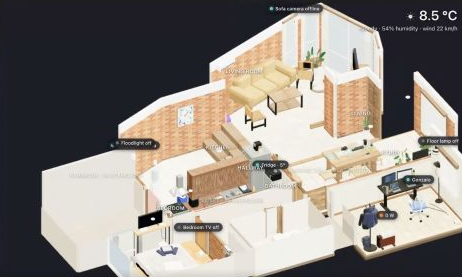 | Gonzalo Melo: tap a virtual lamp, switch on the real one Gonzalo Melo (@gonzalomelov) turned a scan and room photos into a live 3D Home Assistant dashboard. Astra generated the rooms in Three.js; the demo maps pictured objects to devices, so tapping a lamp controls the real light. |
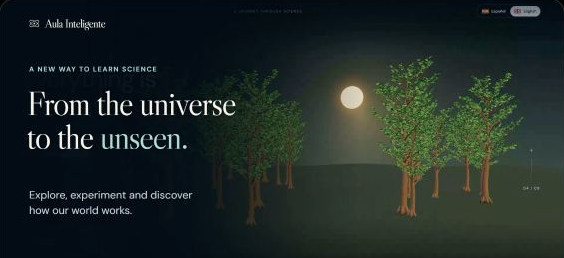 | Aulas Inteligentes: a science lab in your browser Aulas Inteligentes (@AulasInteligent) built a science platform in English and Spanish with interactive 3D labs, simulations, and notebooks. WebMCP gives agents access to the experiments, and Astra helped create the project’s trailer, too. |
|